

Take Our Free Journeyman Electrician Practice Test
100% Free Timed Journeyman Electrician Practice Exam!
No Credit Card or Trial Required.
Table of Contents
A Comprehensive Guide to the Journeyman Electrician Test
The journeyman electrician exam is an important step for electricians who want to work more independently, increase their earning potential, or eventually move toward a master electrician license.
While each state has its own electrical licensing requirements, the exam is usually based on the National Electrical Code (NEC). Most journeyman electrician exams include a mix of code lookup questions, electrical calculations, and general electrical theory.
Whether you’re just starting to study or already deep into practice questions, this page will help you understand the process, avoid surprises, and take your next step toward becoming a licensed journeyman electrician.
What is the Journeyman Electrician Exam?
The journeyman electrician exam is a licensing exam that shows you have the knowledge and field experience needed to work independently on electrical systems while employed by a licensed electrical contractor.
It is not the same thing as a contractor license. A journeyman license allows you to move beyond supervised trainee work, take on more responsibility, and often have more flexibility when moving between employers.
Most electricians take the exam after completing a state-approved apprenticeship or gaining several years of on-the-job experience.
Passing the exam shows that you understand how to use the National Electrical Code (NEC), perform electrical calculations, and follow proper safety practices in the field.

Who Can Take the Journeyman Electrician Exam?
Before you can take the journeyman electrician exam, you’ll usually need to meet certain work experience and education requirements.
These requirements vary by state, but most licensing boards expect a combination of hands-on electrical experience and classroom training.
Typical prerequisites may include:
- 4 to 5 years of electrical work experience under a licensed electrical contractor
- Completion of a registered apprenticeship program
- Classroom instruction in electrical theory, electrical code, safety, and related trade topics
Some states allow apprenticeship completion to satisfy the education requirement, while others require a specific number of classroom hours or documented on-the-job training hours.
If you’re unsure whether you qualify, check your state’s requirements here:
Journeyman Electrical License Requirements By State
How the Application Process Works
Once you meet your state’s eligibility requirements, the next step is to apply through your state licensing board or electrical licensing agency.
The application process varies by state, but you will usually need to submit:
- Proof of your electrical work experience and training hours
- Documentation showing completion of an apprenticeship or approved education program, if required
- A government-issued photo ID
- Payment for the application or examination fee
Some states allow you to apply online, while others still require paper forms to be mailed in. After your application is reviewed and approved, you’ll receive instructions on how to schedule your journeyman electrician exam.
What’s on the Journeyman Electrician Exam?
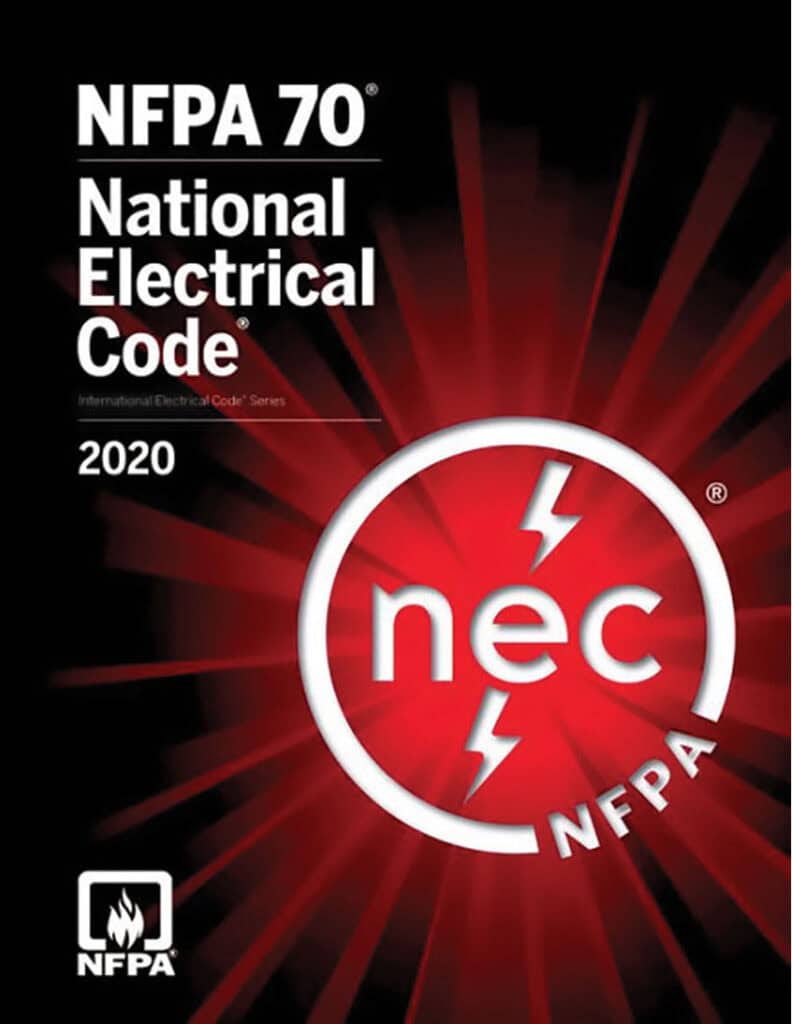
Each state has its own journeyman electrician exam, but most exams cover very similar core material because they are based on the National Electrical Code (NEC).
The NEC is the main foundation of the exam. It covers the rules electricians use for wiring methods, grounding and bonding, conductor sizing, overcurrent protection, load calculations, equipment installation, and more.
In some states, you may also see questions on electrical theory, safety standards, basic troubleshooting, or state-specific licensing rules. These topics are important, but they usually make up a smaller portion of the exam compared to the NEC-based questions.
Below is a breakdown of the main topics you can expect to see on most journeyman electrician exams, especially the NEC sections that make up the majority of the test.
National Electrical Code (NEC)
Most journeyman electrician exams focus heavily on your ability to use the NEC.
These questions are not just testing memorization. They are testing whether you can find the correct code section, understand what it says, and apply it to a real jobsite situation.
To prepare, you should be familiar with the major NEC article groups that show up most often on the exam.
General – Articles 100 to 110
This section includes foundational information such as NEC definitions, equipment labeling, working space clearances, and general rules that apply across the entire code. You may see questions about:
- Article 100 definitions (like “grounded,” “bonded,” etc.)
- Working space around panels (clearance, lighting, etc.)
- Identifying hazardous locations and equipment markings
Wiring and Protection – Articles 200 to 250
This is one of the most heavily tested NEC sections. It covers the design and protection of electrical systems, and includes:
- Branch circuit and feeder requirements
- Load calculations for services and feeders
- Sizing and selecting overcurrent protection
- Rules for grounding and bonding of systems and equipment
- Underground and overhead service conductors
Wiring Methods and Materials – Articles 300 to 399
You’ll be tested on how wiring must be installed, supported, and protected. This section also covers materials and enclosures. Topics include:
- Installation requirements for raceways and cables
- Box fill calculations and conductor count
- Voltage drop calculations
- Pull box sizing
- Use cases and restrictions for different wiring methods (e.g., MC cable, flexible cords, etc.)
Equipment for General Use – Articles 400 to 490
This group covers everyday electrical equipment and how it’s installed. Expect questions about:
- Flexible cords and cable types
- Luminaires and receptacle spacing
- Appliances, motors, and transformers
- Generator requirements and battery storage systems
- Load calculations for motors and continuous loads
Special Occupancies – Articles 500 to 590
Special occupancies are situations where different safety rules apply due to the environment or use of space. You may see questions related to:
- Hazardous locations (Class I, II, III)
- Healthcare facilities
- Aircraft hangars and gas stations
- Mobile and manufactured homes
- Places of assembly like theaters or auditoriums
Special Equipment – Articles 600 to 695
These articles cover unique equipment types and how they must be installed. Examples include:
- Signs and outline lighting
- Elevators, cranes, and hoists
- X-ray equipment and electro-medical devices
- Fuel cells, wind turbines, and energy production systems
- Swimming pools, hot tubs, and fountains
Special Conditions – Articles 700 to 770
This section includes emergency systems and energy management. Common exam topics here include:
- Emergency and legally required standby systems
- Fire alarm circuits and communications wiring
- Energy storage and energy management systems
- Limited energy installations and intersystem bonding
Communications Systems – Articles 800 to 840
Though fewer questions appear from this section, it’s still worth reviewing. You may see questions about:
- Telephone and data cabling systems
- CATV and satellite distribution
- Antennas, radio, and television systems
- Network equipment and grounding
What Types of Questions Are on the NEC Portion?
The NEC portion makes up most of the journeyman electrician exam. Within that section, most questions fall into two main categories: code lookup questions and code calculation questions.
Understanding the difference between these question types is important because they require different test-taking strategies.
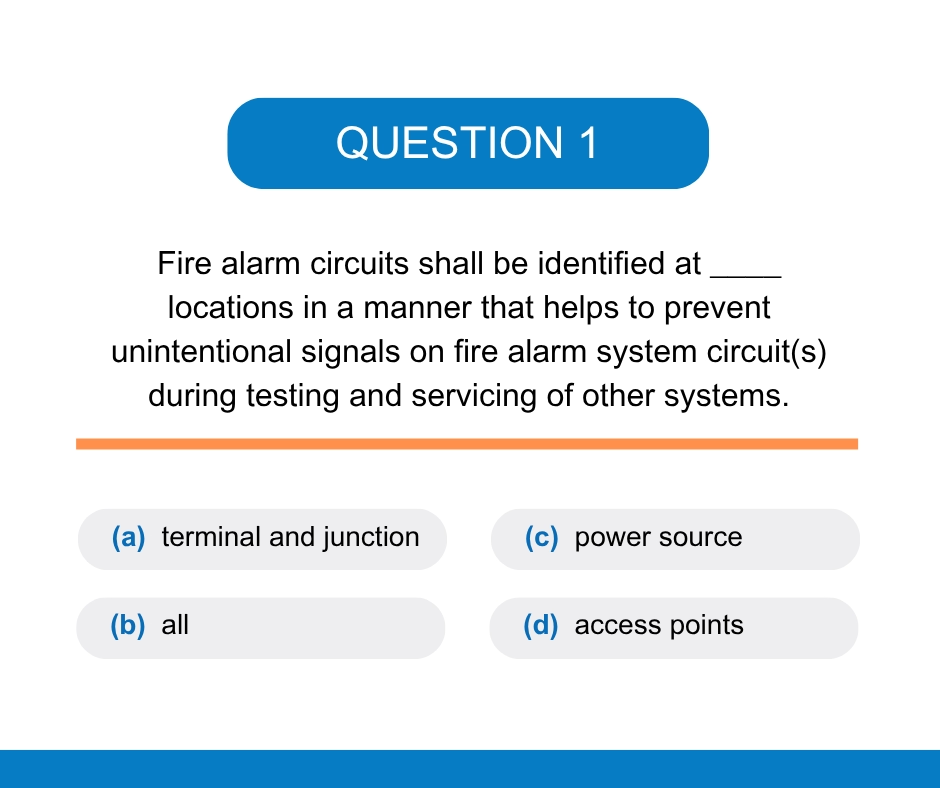
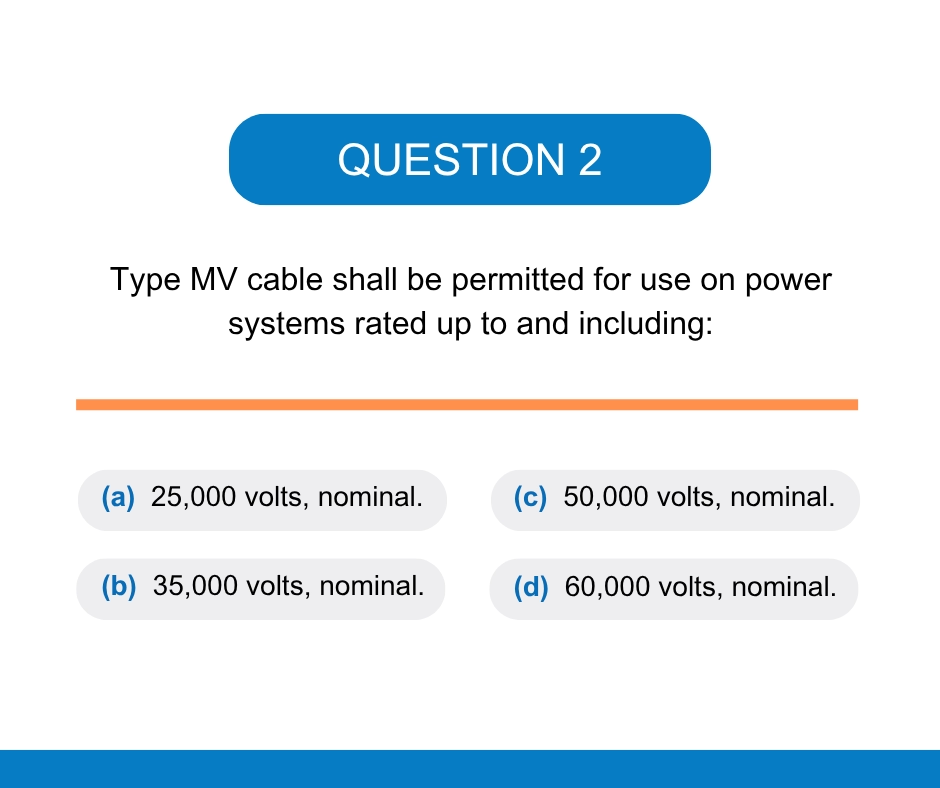
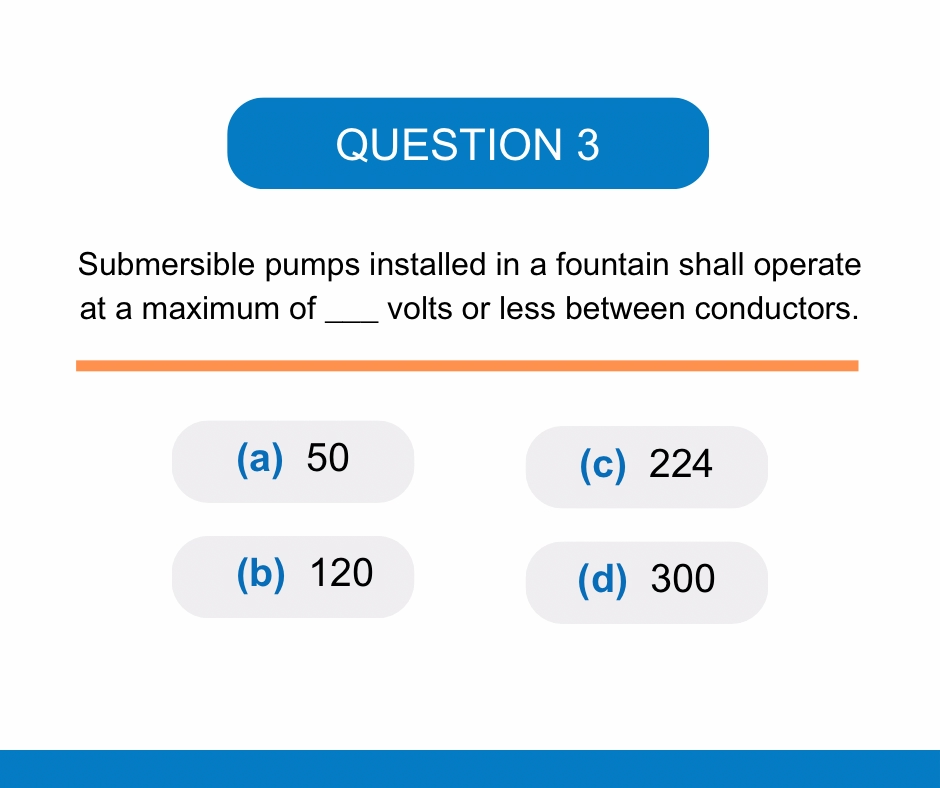
Code Lookup Questions
Code lookup questions test how well you can navigate the NEC book.
These questions usually ask about specific rules, requirements, exceptions, or installation details. In many cases, they are not things you are expected to have memorized.
For example, you may be asked to find the burial depth for a specific wiring method, the required working space around electrical equipment, or the rules for installing conductors in a raceway.
The goal is to find the correct NEC article, section, table, or exception quickly. Once you find the right code reference, you can apply the rule and answer the question with confidence.
Examples:
Answer Key (Click to Expand)
Question 1: A – terminal and junction
Question 2: B – 35,000 volts, nominal
Question 3: D – 300
Code Calculation Questions
Code calculation questions require more than simply finding a code section in the NEC.
These questions usually involve reading the problem carefully, identifying the correct code rule or table, and following a step-by-step calculation process to get the right answer.
You still need to know where to look in the NEC, but you also need to understand how to apply the information once you find it.
Common journeyman electrician exam calculations may include:
- Conductor sizing
- Dwelling unit load calculations
- Commercial feeder and service load calculations
- Optional method service and feeder calculations
- Equipment grounding conductor sizing
- Bonding jumper sizing
- Conductor ampacity adjustment and correction
- Box fill calculations
- Pull box and junction box sizing
- Motor overload protection sizing
- Motor branch-circuit short-circuit and ground-fault protection sizing
- Motor circuit conductor and feeder conductor sizing
- Transformer overcurrent protection requirements
Examples:
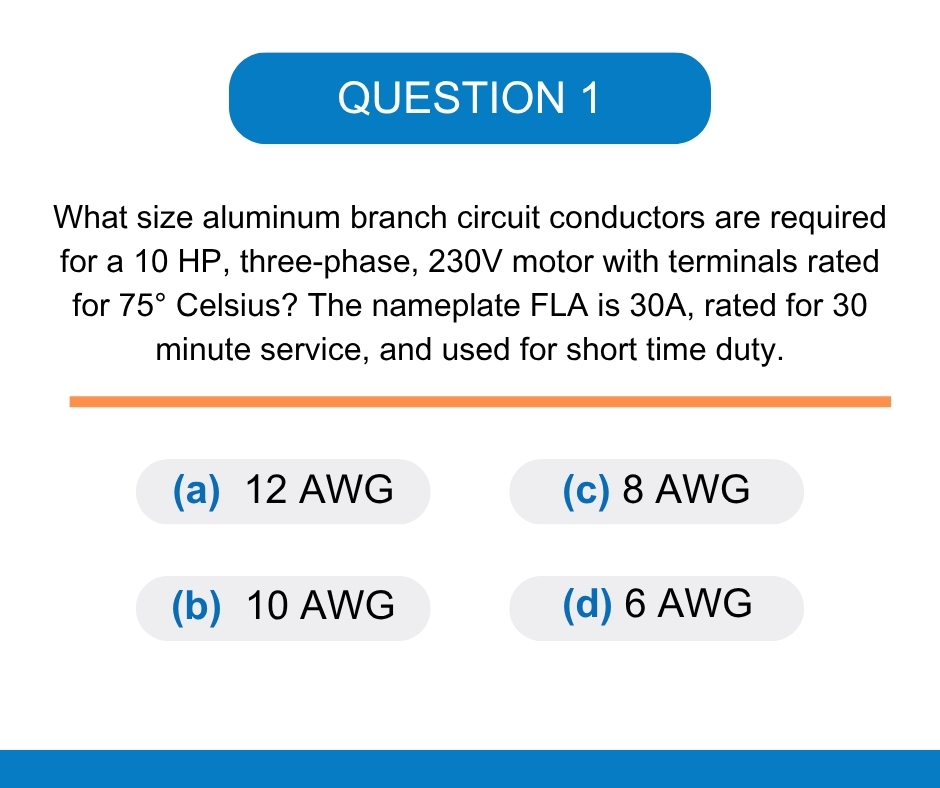
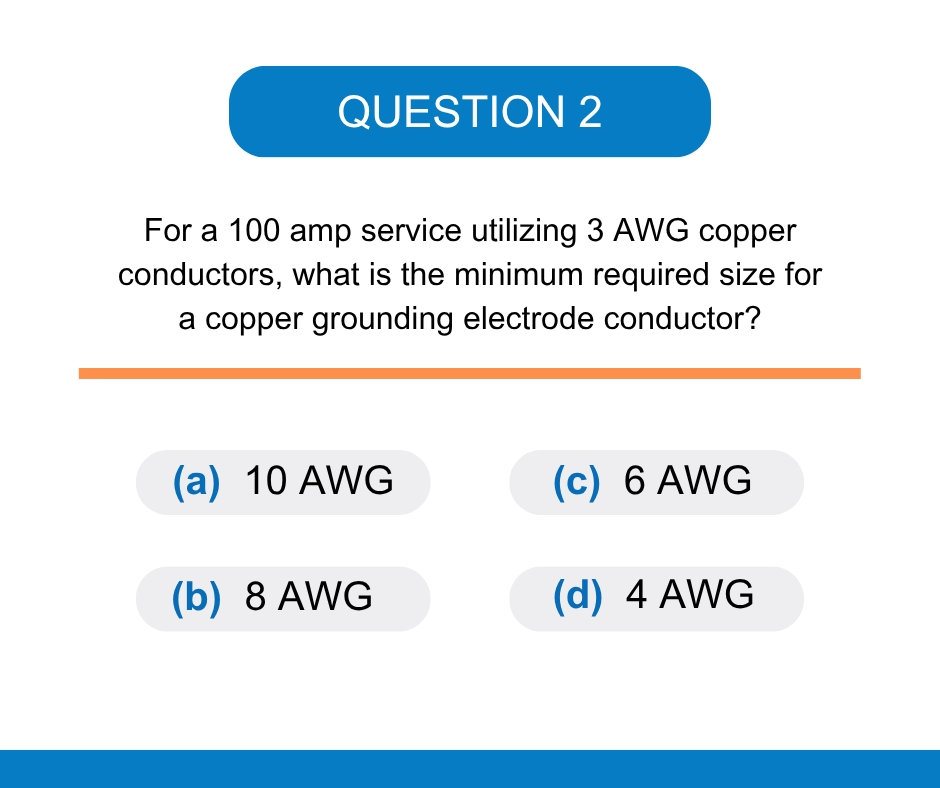
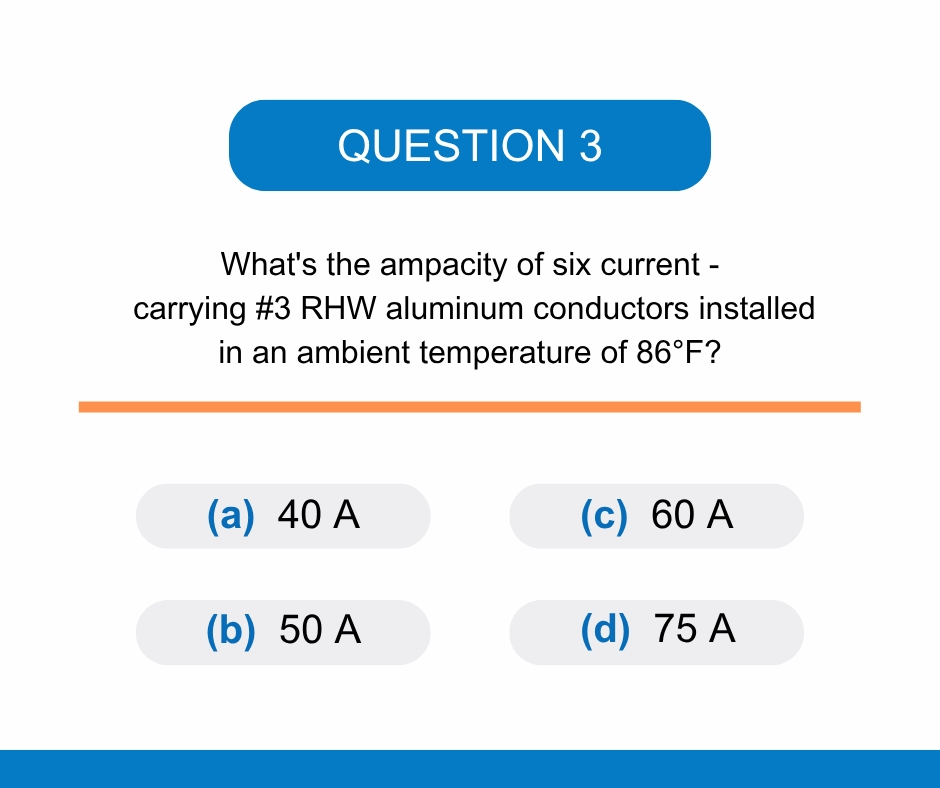
Answer Key (Click to Expand)
Question 1: D – 6 AWG
Question 2: B – 8 AWG
Question 3: C – 60 A
Try Out These Problems and More!
Get instant access to a 100% free, timed journeyman electrician practice exam – built to match the real test and covering all the major topics.
National Electrical Code (NEC) Versions, Explained
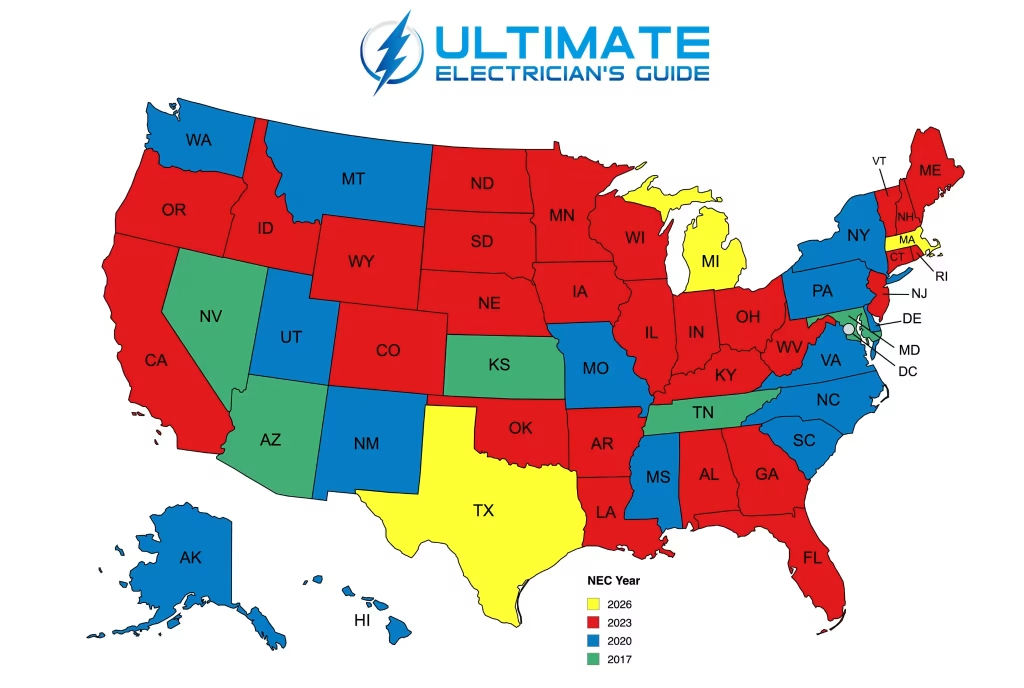
One of the most confusing parts of preparing for the journeyman electrician exam is knowing which version of the National Electrical Code (NEC) your state is testing on.
The NEC is updated every three years, but states do not all adopt the newest edition at the same time. Some states move to the latest NEC quickly, while others continue testing on an older code cycle.
To make it even more confusing, a state may adopt one NEC version into its building code but still test electricians on a different edition for licensing. That is why you should always study from the NEC version listed in your state’s official exam bulletin.
Do not assume the current NEC edition is the one used on your exam. Before you start studying, confirm the exact code cycle your state uses for the journeyman electrician exam.
We’ve included a reference map below to help you check which NEC version is currently used for testing in each state.
Electrical Theory Questions

You won’t need to memorize complex formulas, but you should be comfortable with simple calculations and the relationships between electrical values.
Common theory topics may include:
- Ohm’s Law (E = I × R)
- Series and parallel circuits
- Power and energy calculations (Watts, VA, kWh)
- AC vs. DC current
- Voltage drop
- Power factor and efficiency
- Transformer basics
- Electrical units and conversions
Journeyman Electrician Exam Format
The journeyman electrician exam is always a timed, proctored test taken at an approved testing center on a computer. You can’t take it from home or online.
Most states structure the exam with around 100 multiple choice questions, giving you three to four hours to complete it. The test is open book, but the way you’re allowed to use the NEC codebook can vary widely.
In some states, you’re allowed to bring your own codebook into the exam – often with tabs and handwritten notes to help you navigate faster. In others, you’ll be given a plain, unmarked copy of the NEC that you must use during the test. Knowing which version of the NEC your state uses and how to navigate it efficiently is critical.
You’ll also receive scratch paper and a pen or pencil to work out calculations. Some testing centers allow a basic calculator, but not all. If in doubt, call your testing provider ahead of time to clarify what’s allowed.
Mastering the structure of the exam and the tools available to you can make a major difference on test day.
How the Journeyman Exam Is Scored

To pass the journeyman electrician exam, most states require a minimum score of 70%. That means you need to answer at least 70 out of 100 questions correctly to earn a passing grade.
You’ll typically receive your results immediately after finishing the test. If you pass, the system will simply tell you that you passed—you likely won’t see your exact score. However, if you don’t pass, you’ll usually receive your score along with a topic breakdown showing which areas you struggled with. This can be incredibly helpful in preparing for your retake.
Keep in mind that retake rules and waiting periods vary by state, so make sure to check with your licensing board if that applies to you.
Take Our Free Journeyman Electrician Practice Test
100% Free Timed Journeyman Electrician Practice Exam!
No Credit Card or Trial Required.
How to Prepare for the Journeyman Electrician Exam
The journeyman electrician exam has a high failure rate in many states, especially for first-time test takers.(1)(2)
That should tell you one thing: this test is not easy, and underestimating it is one of the biggest mistakes you can make.
Passing the exam takes more than being a good electrician in the field. You also need to know how to navigate the NEC quickly, understand how code rules are applied, solve multi-step calculations, and manage your time under pressure.
Many electricians struggle because they know the trade, but they are not used to taking code-based exams. The test rewards preparation, speed, accuracy, and knowing where to find the right answer in the codebook.

If you want to give yourself the best chance of passing, one of the smartest ways to prepare is with a structured journeyman electrician exam prep course.
A good prep course should teach you how to navigate the NEC, solve code-based calculations, review important electrical theory, and build the test-taking skills needed for exam day.
It should also include timed practice exams so you can get used to working under pressure and answering questions in a format that feels similar to the real test.
That is exactly why we built our own journeyman electrician exam prep course.

Pass Your Journeyman Exam or Your Money Back!
Enrollment in our premium journeyman prep course gets you a full years worth of access to all of our materials, plus a Pass the Exam Money Back Guarantee!
Select Your State and Click the Button to Learn More!
Beyond the lessons, the single most important step in your preparation is taking practice exams. If you don’t take practice exams, you won’t know what to expect — and you’ll have no real way to measure how ready you are. Practicing with realistic, timed exams not only builds confidence, it helps you identify the areas where you still need work.
Strategies for Test Day
The journeyman electrician exam is not just a test of what you know. It is also a test of how well you can perform under pressure.
Most exams include around 80 to 100 questions and give you roughly 3 to 4 hours to finish, depending on your state and exam provider. That means time management is one of the biggest challenges.
Here are a few strategies to help you stay focused and in control on exam day:
- Arrive early and prepared. Bring a valid photo ID, your exam authorization, and your NEC codebook if your state allows it. Review the testing rules ahead of time so there are no surprises.
- Use your NEC efficiently. Practice finding key articles, tables, and definitions before test day. The faster you can navigate the codebook, the more time you will have to answer questions correctly.
- Skip and return. Do not waste too much time on one difficult question. Make your best choice, flag it if the testing system allows, and come back to it after you answer the questions you know.
- Stay organized during calculations. Use scratch paper to write out each step, especially for load calculations, box fill, conductor sizing, and motor questions. This helps you avoid small mistakes under pressure.
- Know the most-used NEC tables. You do not need to memorize the entire codebook, but you should know where important tables are located. Knowing where to find tables for ampacity, conductor properties, grounding conductors, box fill, and conduit fill can save valuable time.
- Stay calm when you hit a tough section. Every exam has difficult questions. Do not let one problem throw off your pace. Trust your preparation, keep moving, and focus on earning as many points as possible.

Even experienced electricians can fail the journeyman exam — not because they don’t know the material, but because they weren’t prepared for the format, pace, or structure of the test. Here are some of the most common mistakes that hold people back:
Common Mistakes to Avoid
- Studying the Wrong NEC Code Year Make sure you're using the correct version of the NEC for your state. Studying from the wrong edition can cause confusion and lead to incorrect answers on test day.
- Trying to Memorize Instead of Using the Codebook The exam is open book for a reason. Focus on learning how to navigate the NEC efficiently instead of trying to memorize exact code sections.
- Skipping Code-Based Calculations Avoiding math and calculation questions during prep will hurt you on test day. These show up often, and practicing them can save you time and points.
- Bringing the Wrong Codebook to the Testing Center Some states only allow clean, unmarked NEC books. If yours has tabs or notes and your state doesn’t allow them, you could be turned away.
- Letting Stress or Time Pressure Take Over Anxiety and poor time management can throw off your performance. Practicing under timed conditions helps you stay calm and focused when it counts.
Take Our Free Journeyman Electrician Practice Test
100% Free Timed Journeyman Electrician Practice Exam!
No Credit Card or Trial Required.
Frequently Asked Questions
Who administers the Journeyman Electrician Exam?
The exam is typically administered by national testing providers like PSI, Pearson VUE, or PROV, depending on your state. These companies are contracted by state licensing boards to manage scheduling, proctoring, and grading. Your state’s licensing board will direct you to the correct testing agency when you apply.
How many questions are on the Journeyman Electrician Exam?
Most states include around 80 to 100 multiple choice questions, and the test usually takes 3 to 4 hours to complete. The number can vary depending on the state, but the format is always open-book and NEC-based.
What score do I need to pass the exam?
A score of 70% or higher is typically required to pass. You’ll usually receive your results immediately after finishing. If you don’t pass, some testing providers will also include a category breakdown to help you identify weak areas.
Where can I find a free practice exam?
We offer a 100% free Journeyman Electrician practice test, designed to simulate the real exam format and difficulty. You can select your state and get started here — no payment or commitment required.
What version of the NEC is the exam based on?
That depends on your state. The National Electrical Code (NEC) is updated every three years, but many states take time to adopt the latest version. Always check your state’s official licensing board or testing provider to confirm which NEC year your exam will be based on.
What topics are covered on the exam?
The exam primarily tests your knowledge of the NEC, including topics like wiring methods, grounding and bonding, box and conductor sizing, and special occupancies. Some states also include a portion on electrical theory, safety, and math-based calculations.
Can I bring my own codebook to the journeyman electrician exam?
Some states allow you to bring your own NEC book with tabs and handwritten notes, while others require a clean, unmarked version that they provide at the testing center. Check with your testing agency in advance so you’re not caught off guard.
Is the exam really open book?
Yes! Every version of the Journeyman Electrician Exam is open book, and you’ll be allowed to reference the NEC throughout the test. But don’t rely on the codebook alone — you still need to know how to navigate it quickly and apply the rules correctly under timed conditions.
How many times can I retake the exam if I fail?
Most states allow multiple retakes, though you may need to wait a set number of days between attempts and pay a retesting fee. Some states also cap the number of attempts before requiring a re-application, so it’s best to check your state’s rules.
How do I pass the Journeyman Electrician Exam?
The best way to pass is to study the National Electrical Code (NEC) thoroughly and take realistic practice exams. Use a prep course to guide your learning, especially for code lookups, calculations, and navigating the codebook quickly under pressure. Make sure you’re using the correct NEC version for your state.
How much is the Journeyman Electrician Test?
The cost varies by state but typically ranges from $75 to $150 per attempt. The fee is paid directly to the testing provider—like PSI, Pearson VUE, or PROV—when you schedule your exam. Check your state’s licensing board for the most accurate fee details.