

Free IBEW Aptitude Practice Test 2026
Take a full-length, timed IBEW aptitude practice test with algebra and functions plus reading comprehension. Get instant results, see where you stand, and find out what to study before test day.
- 33 algebra & functions questions
- 36 reading comprehension questions
- Timed sections — real test format
- Instant results after completion
- 100% free to take
Results in minutes • Built for IBEW applicants
Table of Contents
What Is the IBEW Aptitude Test?
Starting a career as an electrician through the International Brotherhood of Electrical Workers (IBEW) is one of the strongest paths into the electrical trade. Before being accepted into an IBEW apprenticeship program, most applicants have to pass the IBEW aptitude test.
You’ll see this same exam called by several different names. Depending on the local and the era, it’s referred to as the NJATC aptitude test, the JATC aptitude test, or the Electrical Training Alliance aptitude test.
The naming reflects the organization’s history: the National Joint Apprenticeship and Training Committee (NJATC) was rebranded as the Electrical Training Alliance, and individual local programs are run through a Joint Apprenticeship and Training Committee (JATC). Different label, same standardized entrance exam.
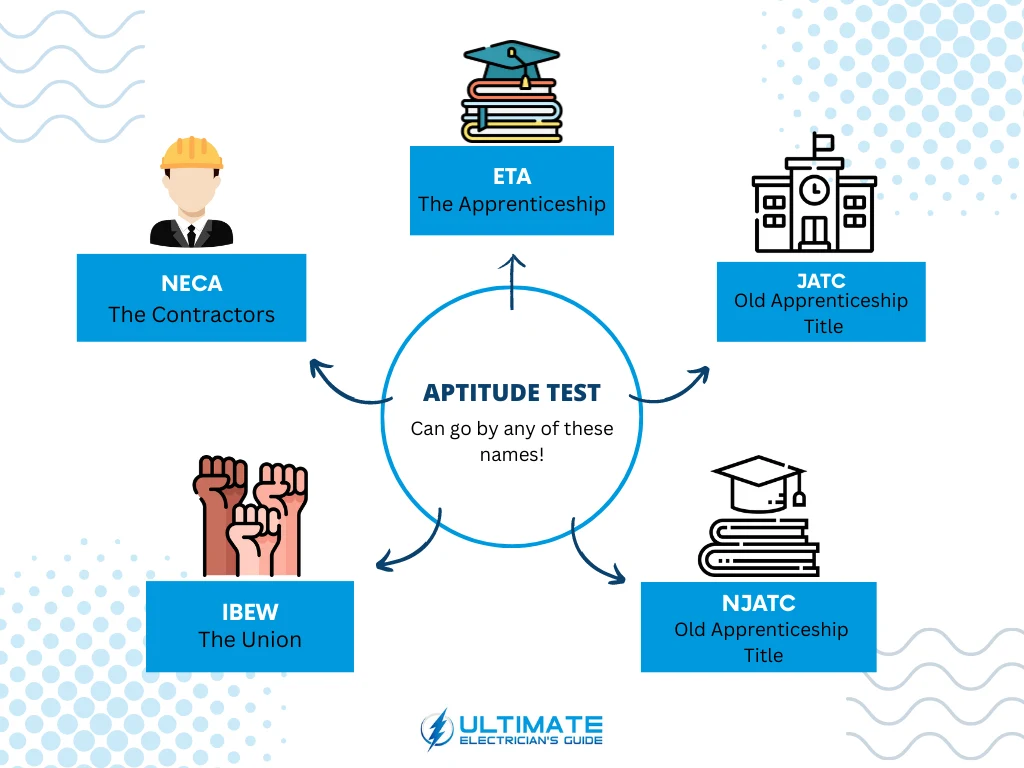
The test measures the core math and reading skills you’ll rely on in an apprenticeship. It does not test prior electrical knowledge, and it doesn’t require any wiring theory.
What it’s really checking is whether you can handle the algebra and reading load of the classroom instruction that comes with the program.
Because the subjects are consistent from local to local, algebra, functions, and reading comprehension, strong preparation carries over no matter which local apprenticeship program you apply to.
The rest of this guide walks through the format, the two sections in detail, how scoring works, how to study, what to expect on test day, and what happens after you test.
Algebra and Functions Section
The Algebra and Functions section is 33 questions in 46 minutes, and it comes first. You’ll usually get a short break before the reading section begins.
This section measures how well you work through algebra problems, recognize patterns, and understand how functions behave. Expect equations, number sequences, variables, graphs, function rules, and operations with fractions, decimals, powers, and roots.
Many problems aren’t phrased like the school math you remember. You’ll need to follow instructions carefully, apply “if this, then that” logic, and work through unfamiliar problem types quickly.
Key Topics You Will Encounter
- Multivariable Equations: Solving equations with several variables by substituting given values and simplifying to find the unknown.
- System of Equations: Solving sets of equations with multiple variables at once.
- Complex Multivariable Polynomials: Simplifying long polynomial expressions with multiple variables and operations.
- Multivariable Factoring: Factoring quadratic expressions that contain more than one variable.
- Graphing Quadratics: Matching quadratic equations to their graphs, or reading the equation off a graph.
- Quadratic Equations: Solving second-degree equations by factoring or with the quadratic formula.
- Number Series: Spotting the pattern in a sequence and finding the next term.
- Function Information Analysis: Working out properties like intercepts and behavior from a function.
- Most Difficult Evaluating functions and understanding the relationships between variables.
- Most Difficult Manipulating functions to see how changing one variable affects others.
Test Your Skills Now!
Timing
33 questions in 46 minutes works out to about 1 minute 23 seconds per question. You can’t afford to stall. If a problem is taking too much time, make your best choice, move on, and come back if time allows. There’s no penalty for wrong answers, so an educated guess always beats a blank answer.
Sample Questions
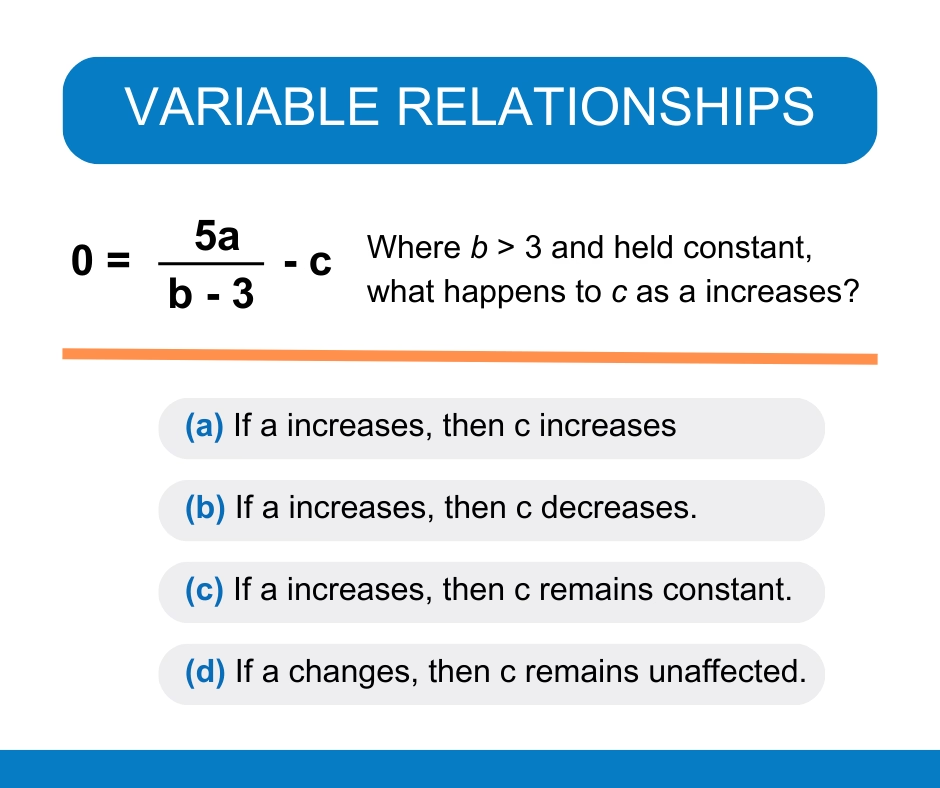
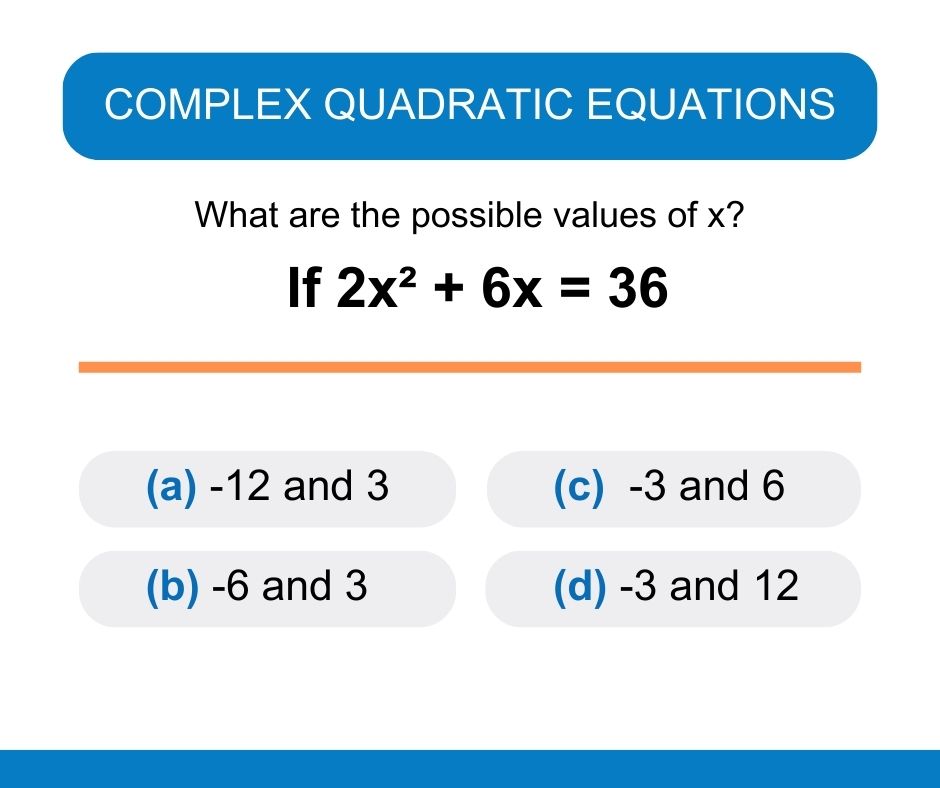
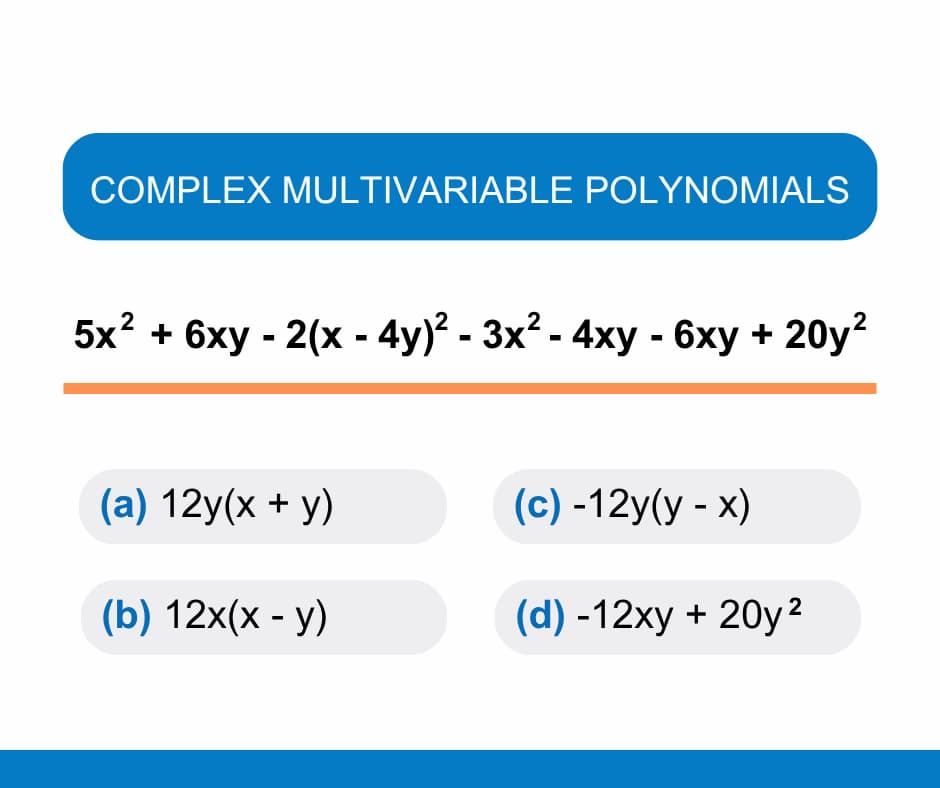
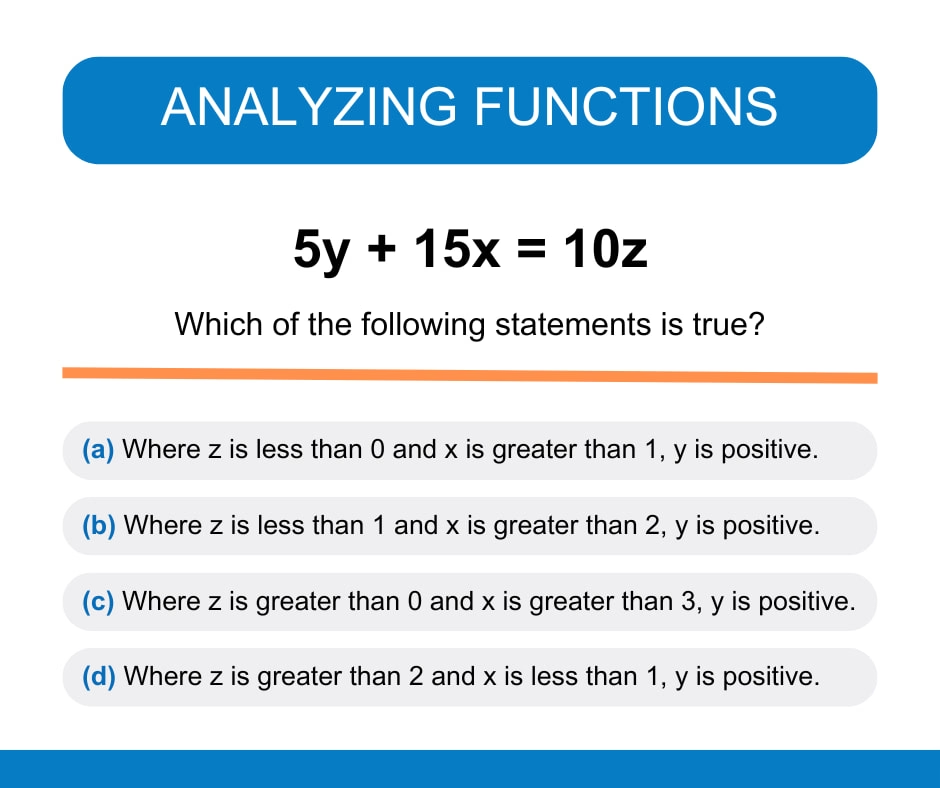
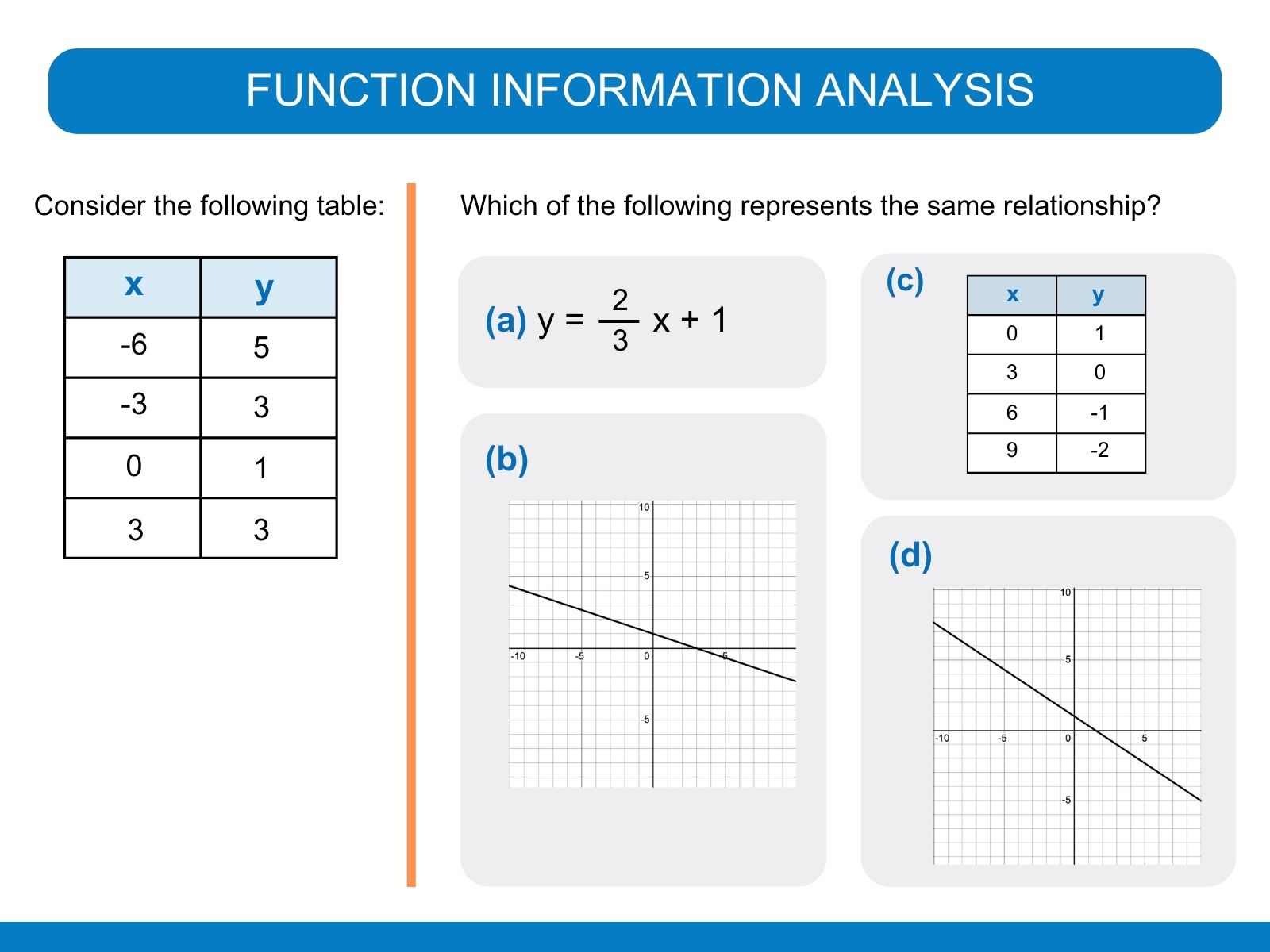
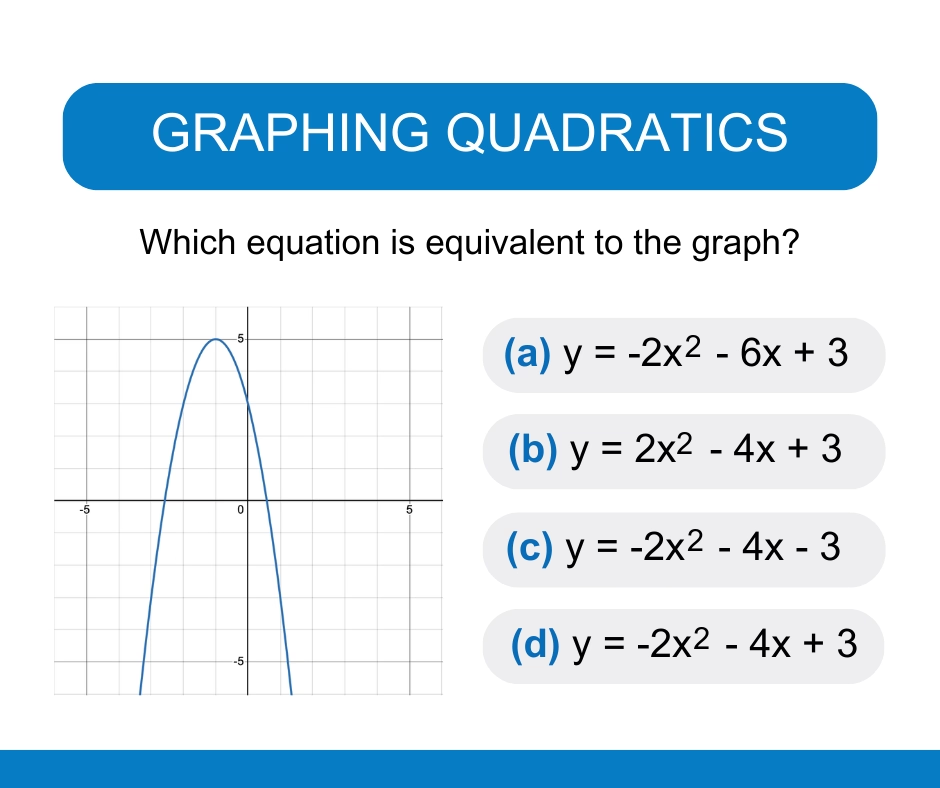
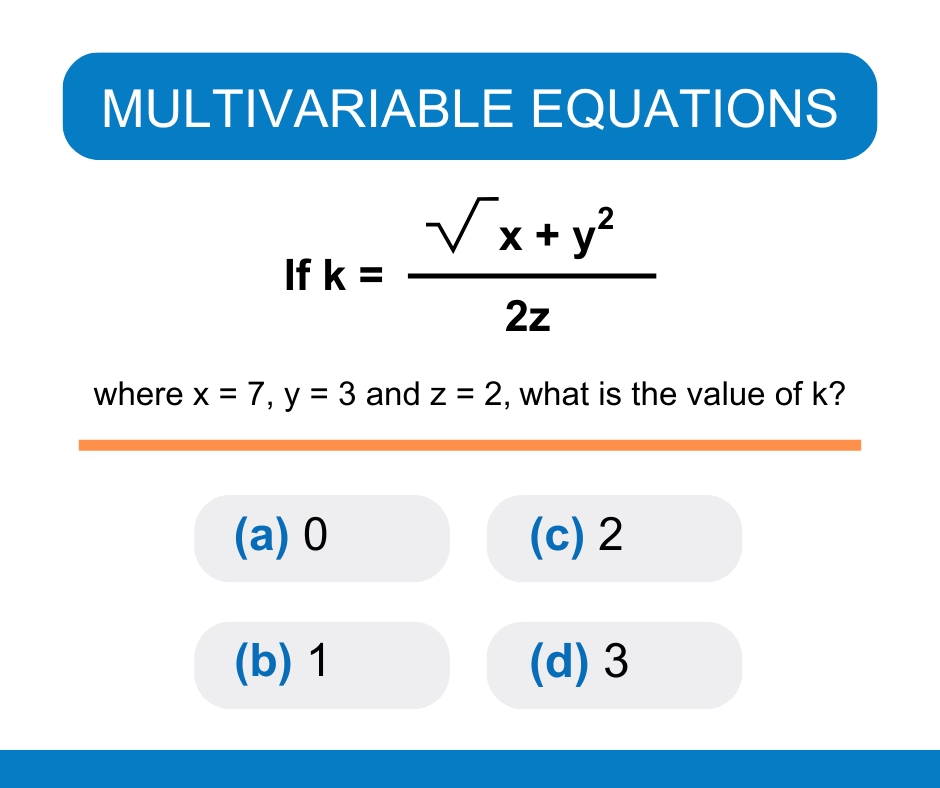
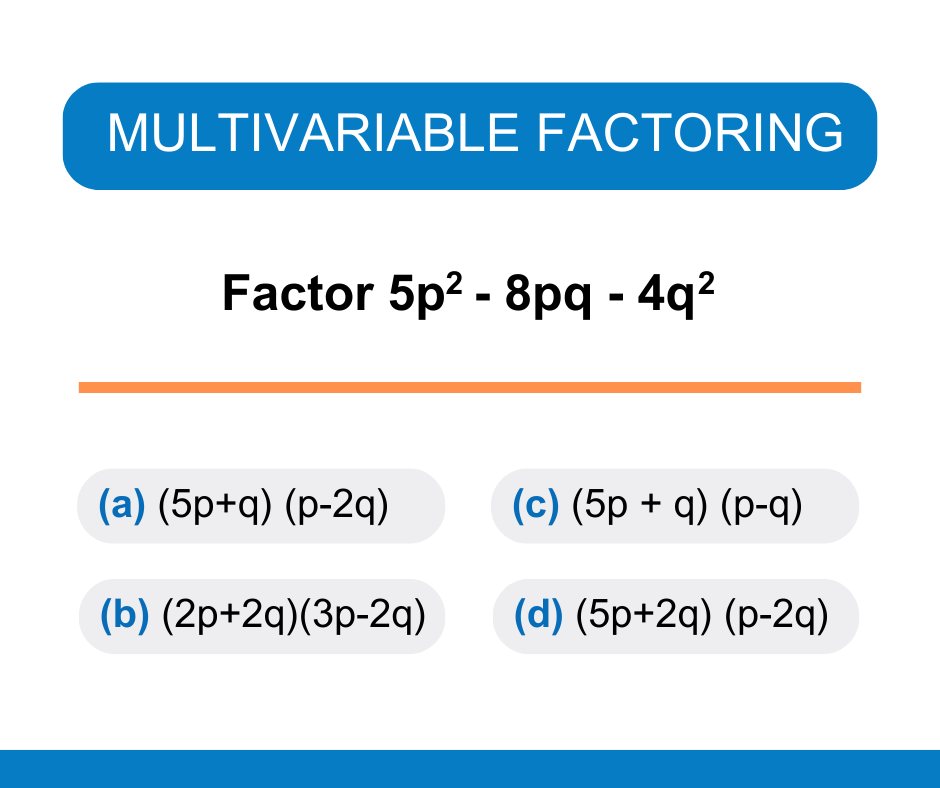
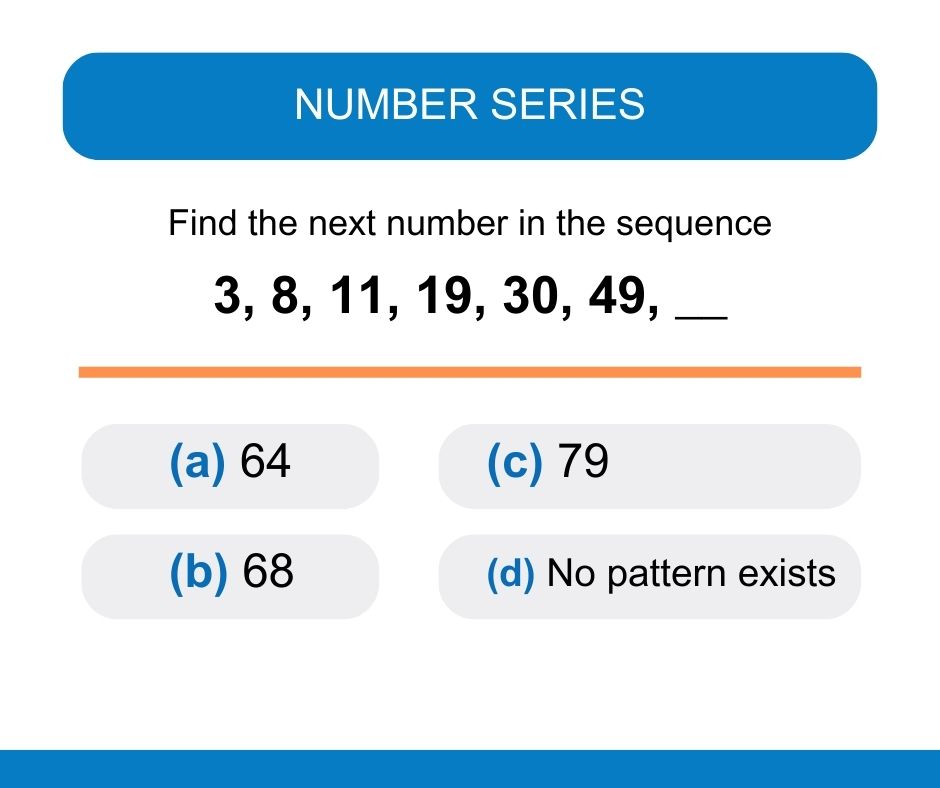
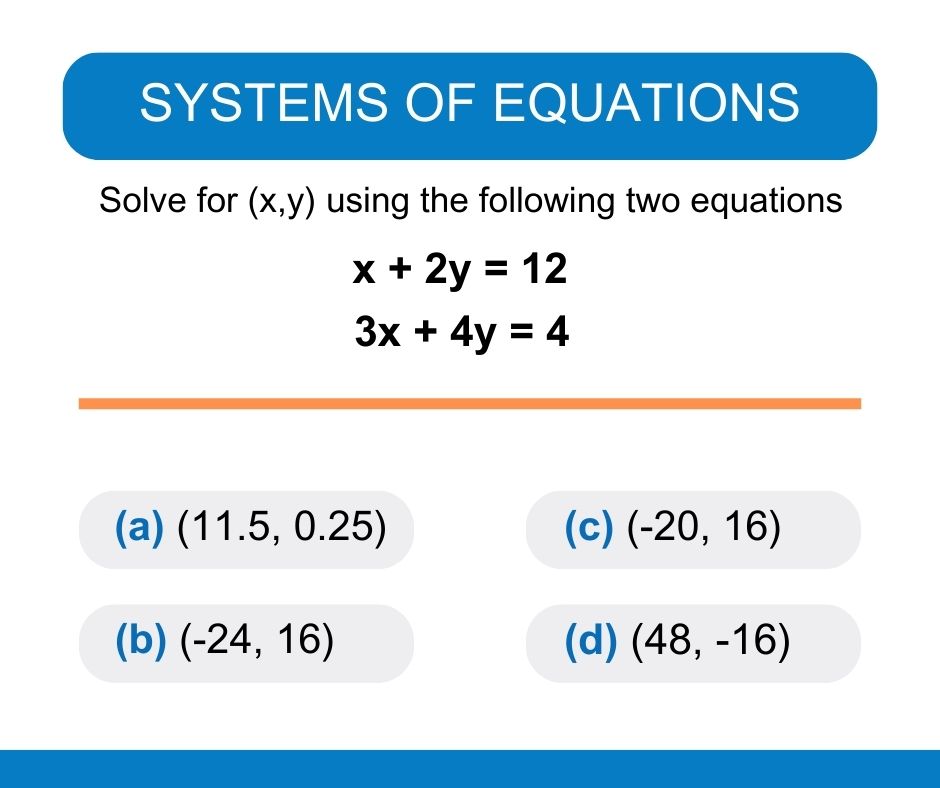
Test Your Skills Now
Reading Comprehension Section
The Reading Comprehension section is 36 questions in 51 minutes. It measures how well you read a passage, find the main idea, and answer questions from the information given.
This matters on the job. Electricians read code sections, safety rules, blueprints, manuals, and work orders, and getting the details wrong has consequences. On the test you’ll get several passages on varied subjects, science, history, social studies, and technical topics, each followed by multiple-choice questions.
What It Tests
- Main Idea: Identify the central point of a passage.
- Inferences: Draw conclusions from what’s implied but not stated outright.
- Analyzing Arguments: Weigh the author’s reasoning and how well their claims hold up.
- Vocabulary in Context: Work out a word’s meaning from how it’s used.
- Function of a Sentence: See how a specific sentence serves the passage’s structure or purpose.
- Supporting Evidence: Locate the lines that back up a particular claim.
Sample Passage for Reading Comprehension
3 Questions · Select one answer per question
Mature trees are often among a city's most valued pieces of infrastructure, even though they are rarely described that way. Their canopies provide shade, reduce surface temperatures, absorb rainfall, and can make heavily developed neighborhoods more comfortable during periods of extreme heat. Because large trees may take decades to replace, residents sometimes object when a city removes one that appears healthy. From the sidewalk, cutting down such a tree can seem unnecessary or even wasteful.
Yet the condition of a tree is not always apparent from its leaves or branches. Roots may be damaged by construction, disease can weaken internal wood, and repeated pruning may alter the way weight is distributed throughout the tree. In some cases, a tree can continue producing a full canopy even after its structural stability has been compromised. Arborists therefore evaluate more than outward appearance. They may examine root conditions, cavities, cracks, previous limb failures, and the likelihood that the tree could strike a road, building, or pedestrian area if it fell.
For city officials, the decision is often a question of managing competing risks rather than determining whether a tree has value. Removing every tree that shows a defect would sacrifice many trees that could safely remain for years. Waiting until failure is certain, however, could expose the public to avoidable danger. As a result, cities may remove some trees before failure appears imminent while continuing to monitor others with similar defects. Such decisions can appear inconsistent when viewed individually, but they often reflect differences in location, structural condition, and the potential consequences of failure.
↕ Scroll to read full passage
Ready for the Real Thing?
Get a free full-length practice exam covering both Math and Reading Comprehension, just like the IBEW aptitude test.
⚡ Claim Your Free Practice ExamA Few Strategies That Help
- Read actively. Track the main idea, the supporting details, and the author’s tone as you go.
- Annotate. Underline or jot quick notes so details are easy to find when the questions come.
- Refer back. Base every answer on the text, even when you’re confident. Double-checking catches misreads.
- Watch the clock. About 1.5 minutes per question including reading keeps you on pace.
- Read widely beforehand. Articles, essays, and reports on unfamiliar subjects build the adaptability this section rewards.
Strategy #1:
Active Reading
Immerse yourself in each passage by focusing on the main ideas, supporting details, and the author’s tone. Visualizing concepts and considering the relationships between different parts of the text can deepen your comprehension.
Strategy #2:
Annotate Key Points
Jot down brief notes or underline significant sentences as you read. This helps reinforce important information and makes it easier to locate details when answering questions.
Strategy #3:
Anticipate Questions
While reading, think about what aspects of the passage might be tested. Identifying potential questions keeps you engaged and prepares you for the types of queries you may encounter.
Strategy #4:
Refer Back to the Passage
Always base your answers on information provided in the text. Even if you’re confident, double-checking the passage ensures accuracy and helps prevent misunderstandings.
Strategy #5:
Manage Your Time
Allocate about 1.5 minutes per question, including reading the passage. Being mindful of the clock helps you maintain a steady pace and ensures you have enough time to address all questions without feeling rushed.
Strategy #6:
Broaden Your Reading Horizons
Practice reading diverse materials such as articles, essays, and reports on various subjects. Exposure to different writing styles enhances your adaptability and builds vocabulary and critical thinking skills essential for the test.
How the Test Is Scored
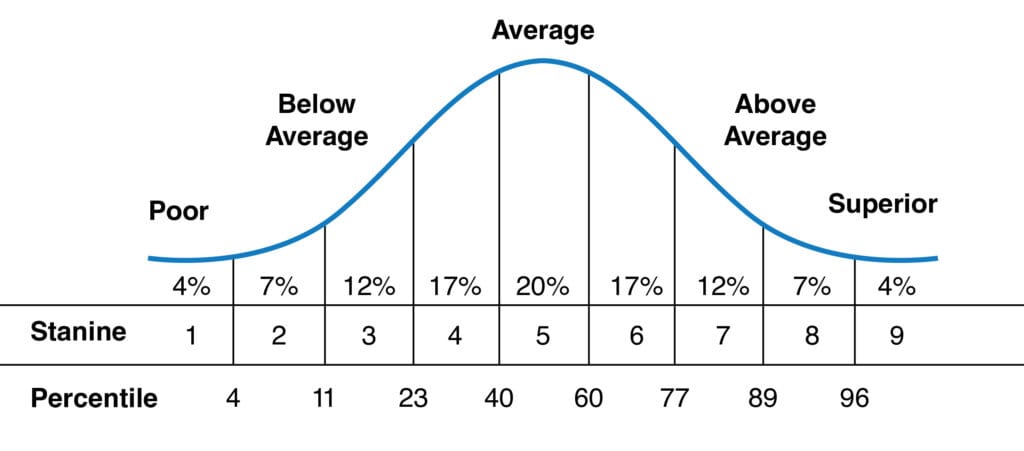
The IBEW aptitude test uses a stanine scoring system, which ranks your result on a scale from 1 to 9. A 5 is average. Below 5 is below average, and above 5 shows stronger performance relative to other applicants. Both sections feed one combined score rather than being scored separately.
The Qualifying Score
Most locals require a minimum score of 4 to pass and move forward, though the cutoff varies, with some locals setting it at 3 and others at 5. There’s no penalty for wrong answers, so only correct answers move your score. Passing, though, doesn’t by itself guarantee an interview or a strong spot on the list.
Apprenticeships are competitive, so the goal isn’t to barely clear the bar. A higher score strengthens your whole application. Aim for an 8 or 9 if you can, since it shows you’re ready for the math and reading demands of the program.
How Your Score Affects Ranking
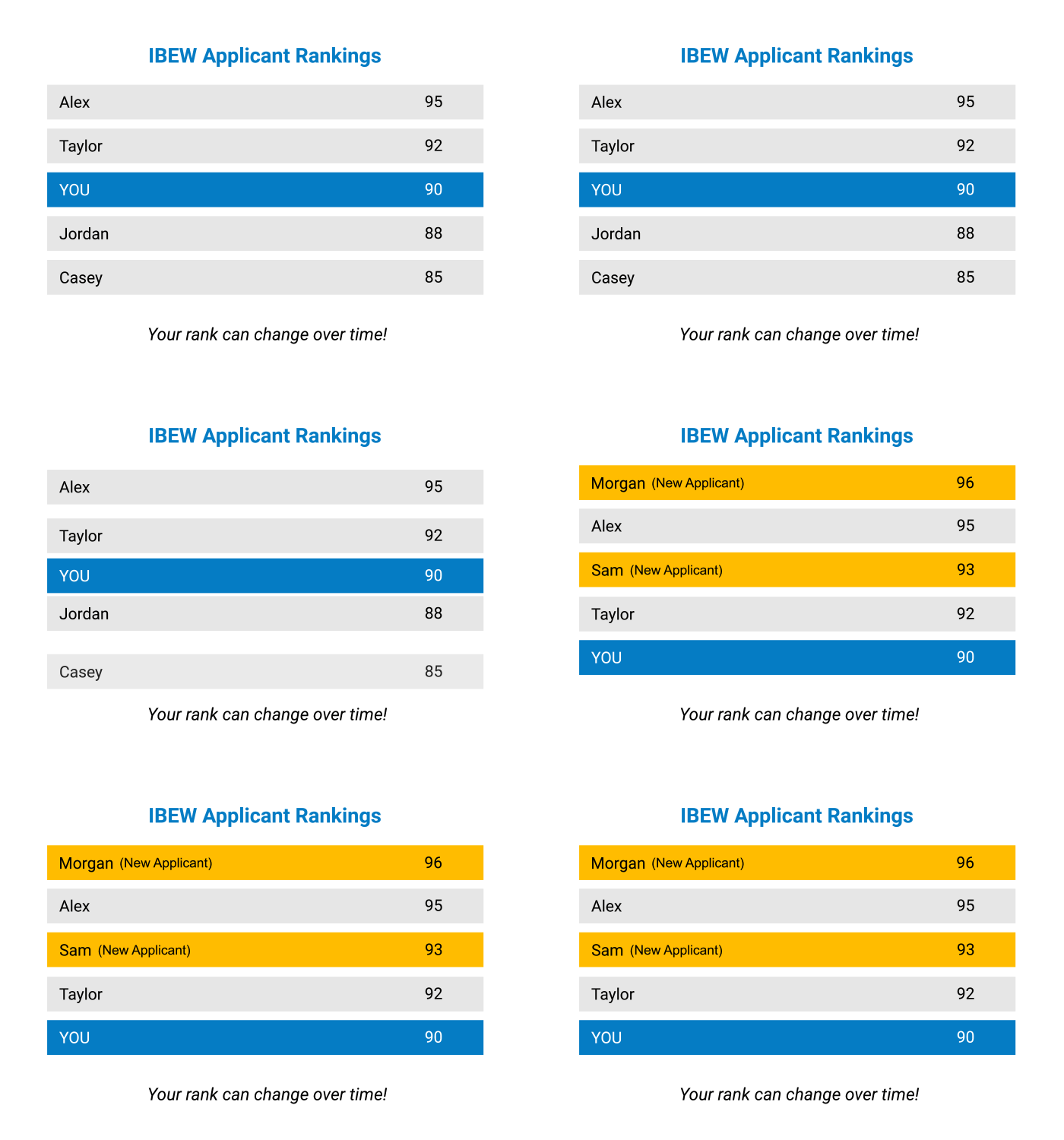
Locals rank applicants on a combination of the aptitude test score and the interview, and that ranking sets your position in the hiring queue. Higher-ranked applicants generally get offers before lower-ranked ones. Your position isn’t fixed either. As new applicants test and interview, the list shifts around you.
This is why barely passing is risky. A 4 gets you on the list, but it can leave you behind applicants with stronger combined scores, which means a longer wait or a missed shot. A higher test score is the part of the ranking you have the most control over.
Local Variation
None of the above is perfectly uniform. Qualifying scores, how results are reported, and how ranking is handled all vary from local to local. Some locals won’t even disclose your exact score. Treat the numbers here as the general rule and confirm the specifics with the local you’re applying to.
How to Study for the IBEW Aptitude Test
A good score comes from structured practice, not cramming. Here’s a plan that works.
1. Take the free practice test first
Before you build a study plan, find out where you actually stand. The free timed practice test gives you a realistic stanine range now and shows which section needs the most work, so you study the right things instead of guessing.
2. Set specific goals
Swap vague targets like “study math” for concrete ones like “master quadratic equations” or “improve inference questions.” Specific goals keep sessions focused.
3. Practice on a schedule
Consistent, dedicated slots beat occasional long grinds. Regular practice turns studying into a habit and locks in what you learn.
4. Balance both sections
Most applicants over-index on math and neglect reading. The passages are harder than people expect, and both sections weigh equally, so split your time.
5. Simulate real conditions
Take timed practice in a quiet space, 46 minutes for math and 51 for reading, so the pacing feels familiar on test day. It doesn’t matter if you know how to do each problem, but it is essential to allocate only 4 minutes per problem. If you exceed that limit, you’ll run out of time and fail the exam. You need to practice answering the questions efficiently.
6. Review every answer
Go back over questions you got right as well as wrong, and make sure you understand the reasoning. That’s what stops repeat mistakes.
What to Expect on Test Day

Preparation goes past studying. Being rested and organized on the day itself makes a real difference.
Bring the Right Things
- Photo ID. A government-issued ID is normally required to verify who you are.
- Any required paperwork. Check whatever the testing center sent you for extra items to bring.
- Water. Staying hydrated helps you concentrate.
No Calculator
You cannot use a calculator on either section, so all the arithmetic is on you. This is exactly why calculator-free practice matters beforehand. It shouldn’t be a surprise on the day.
Scratch Paper
Scratch paper is typically provided for working through the math. Use it deliberately: lay out each problem cleanly so you can catch your own mistakes instead of losing track mid-calculation.
Timing
The sections are strictly timed, 46 minutes then 51. Keep an eye on the clock without letting it rattle you. If a question is tough, skip it, lock in the ones you’re sure of, and circle back. Arrive at least 15 minutes early, since many centers treat late arrivals as no-shows and you could wait months to reapply.
Retake Rules
If you don’t pass, most locals make you wait before testing again, often around six months, but the exact retake window is set locally. Confirm the policy with your local rather than assuming.
What Happens After the Test
Finishing the exam is one step, not the finish line. Here’s how the rest of the process unfolds.
Results

Scores are usually reported within 2 to 4 weeks, though timing varies by local. Expect little to no contact during that window.
That silence is normal while the local processes results and lines up interviews. Some locals release your exact score and some don’t, but a minimum of 4 is generally what you need to advance.
The Interview
Passing moves you to the interview, which is scored alongside your test result to build your ranking. Use the waiting period to prepare: sharpen your resume, pick up hands-on construction or electrical experience where you can, and practice talking through why you want the trade. Our IBEW interview prep course walks through exactly what to expect and how to present yourself.
The Eligibility List
Once test and interview scores are combined, you land on the ranked eligibility list, and offers go out from the top down. Your spot can move as new applicants are added and others are selected, so staying on the list is normal and it doesn’t mean you’ve been passed over.
While you wait, ask your local about pre-apprenticeship roles like Material Handler (MH) and Construction Wireman (CW). These let you earn real jobsite experience, build relationships in the union, and show your commitment, all of which help your standing when openings come up.
Frequently Asked Questions (FAQ)
What is the IBEW Aptitude Test?
The IBEW Aptitude Test is an entrance exam used by the International Brotherhood of Electrical Workers to assess candidates for their electrical apprenticeship programs. It evaluates basic math and reading comprehension skills essential for a successful career as an electrician.
Is there a difference between the IBEW and NJATC Aptitude Tests?
No, there is no difference. The IBEW Aptitude Test and the NJATC (National Joint Apprenticeship and Training Committee) Aptitude Test are the same exam, commonly referred to by both names.
Are calculators allowed on the IBEW Aptitude Test?
No, calculators are not permitted during the IBEW Aptitude Test. All calculations must be done manually, so it’s important to practice solving math problems without one.
What is the minimum passing score for the IBEW Aptitude Test?
The minimum passing score is typically a 4 out of 9 on the Stanine scale. However, achieving a higher score can improve your ranking and increase your chances of acceptance into the apprenticeship program.
How long does it take to receive IBEW Aptitude Test results?
It usually takes between 2 to 8 weeks to receive your test results. The waiting period can vary depending on the local IBEW chapter’s processing time.
How can I prepare for the IBEW Aptitude Test effectively?
Effective preparation includes creating a structured study plan, practicing regularly with both math and reading comprehension materials, and utilizing resources like practice tests and prep courses specifically designed for the IBEW Aptitude Test.
What topics are covered on the IBEW Aptitude Test?
The test covers two main areas: Algebra and Functions, including equations, polynomials, and graphing; and Reading Comprehension, which assesses your ability to understand and interpret written passages.
How difficult is the IBEW Aptitude Test?
The difficulty level varies for each individual, but many find it challenging due to time constraints and the breadth of topics. Thorough preparation and practice can help you manage the difficulty effectively.
Can I retake the IBEW Aptitude Test if I fail?
Yes, you can retake the test if you do not pass. However, you must wait at least six months before reapplying to take the exam again.
How is the IBEW Aptitude Test scored?
The test uses a Stanine scoring system, ranking scores on a scale from 1 to 9, with 5 being average. Both sections of the test contribute equally to your overall score.
Do all IBEW locals use the same Aptitude Test?
Yes, the IBEW Aptitude Test is standardized and used by most IBEW locals across the United States, ensuring a consistent assessment process for all applicants.
What is the format of the IBEW Aptitude Test?
The test consists of two sections: a math section with 33 questions to be completed in 46 minutes, and a reading comprehension section with 36 questions to be completed in 51 minutes. All questions are multiple-choice.
Are there any free practice tests for the IBEW Aptitude Test?
Yes, free practice tests are available online to help you familiarize yourself with the exam format and question types. These resources are valuable for effective IBEW Aptitude Test practice.
What math skills are required for the IBEW Aptitude Test?
You should be proficient in algebra, including solving equations, understanding functions, working with polynomials, and graphing. Practicing these skills without a calculator is important due to test restrictions.
Is the IBEW Aptitude Test multiple-choice?
Yes, all questions on the IBEW Aptitude Test are in a multiple-choice format, requiring you to select the best answer from the options provided.
Can I use scratch paper during the IBEW Aptitude Test?
Yes, you are typically allowed to use scratch paper provided by the testing center to work out problems during the exam.
How long is my IBEW Aptitude Test score valid?
Your IBEW Aptitude Test score is valid for two years from the date of your exam.
How does my IBEW Aptitude Test score affect my ranking?
Your test score directly influences your ranking in the apprenticeship selection process. Higher scores improve your position, increasing your chances of being accepted into the program sooner.